EN
How does Onclass work? Support Online now: 934

Video / Lessons

Popular lessons

0
8
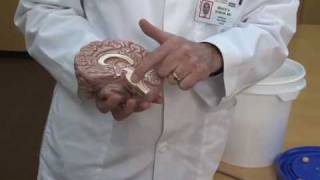
How the Brain Works Part 1 (UCLA)
  • Biology

How the Brain Works Part 1 (UCLA)

These brief videos provide an introductory appreciation of how we learn skills and information, move, think, feel, speak and remember. They are brought to you by the UCLA Brain Research Institute and by Bruce H. Dobkin, MD, who directs the neurorehabilitation program in the Department of Neurology at UCLA. The videos especially aim to reach out to students in grade school to stir their interest, and to people with disabilities in walking, using an affected upper extremity, and loss of memory from neurological diseases such as stroke, brain trauma, tumors, multiple sclerosis, cerebral palsy, Parkinsons, and Alzheimers disease.

  • Video
  • Beginner
  • English
Andrei Scherbak
Andrei Scherbak
0
8
Sound: Crash Course Physics #18
  • Physics

Sound: Crash Course Physics #18

We learn a lot about our surroundings thanks to sound. But... what is it exactly? Sound, that is. What is sound? And how does it travel? And what is this Doppler Effect that we've heard so much about? In this episode of Crash Course Physics, Shini goes over some of the basics (and some of the not so basics) of the Physics of Sound.

  • Video
  • Beginner
  • English
Andrei Scherbak
Andrei Scherbak
0
8
Lettre de Londres
  • French

Lettre de Londres

Je suis bien arrivée à Londres pour ma dernière année d’études de marketing à l’université. Là-bas tout le monde parle anglais ! Londres est différent de Paris. Par exemple, les bus sont rouges et certaines stations de métro semblent très anciennes.

  • Video
  • Pre-Intermediate
  • English
Eugeniia Klimutina
Eugeniia Klimutina
0
6
Vectors and 2D Motion: Crash Course Physics #4
  • Physics

Vectors and 2D Motion: Crash Course Physics #4

Continuing in our journey of understanding motion, direction, and velocity... today, Shini introduces the ideas of Vectors and Scalars so we can better understand how to figure out motion in 2 Dimensions. But what does that have to do with baseball? Or two baseballs?

  • Video
  • Beginner
  • English
Andrei Scherbak
Andrei Scherbak
0
6
Learn English
  • English

Learn English

Learn important, basic words you will need when you travel. Knowing a little English vocabulary can help a lot when you are travelling. Whever you are going in the world, you can almost always find someone who speaks some English.

  • Video
  • Elementary
  • English
Eugeniia Klimutina
Eugeniia Klimutina
0
6
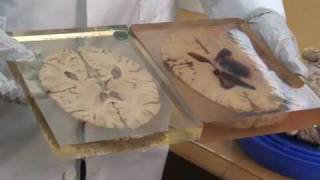
How the Brain Works Part 3 (UCLA)
  • Biology

How the Brain Works Part 3 (UCLA)

How the Brain Works These brief videos provide an introductory appreciation of how we learn skills and information, move, think, feel, speak and remember. They are brought to you by the UCLA Brain Research Institute and by Bruce H. Dobkin, MD, who directs the neurorehabilitation program in the Department of Neurology at UCLA. The videos especially aim to reach out to students in grade school to stir their interest, and to people with disabilities in walking, using an affected upper extremity, and loss of memory from neurological diseases such as stroke, brain trauma, tumors, multiple sclerosis, cerebral palsy, Parkinsons, and Alzheimers disease.
  • Video
  • Beginner
  • English
Andrei Scherbak
Andrei Scherbak

Other lessons

0
20
Clothes
  • English

Clothes

In this class we will discuss clothes and colors

  • Theory with exercises
  • Elementary
  • English
Maria  Nekrasova
Maria Nekrasova
0
20
Lost in time
  • English

Lost in time

In this class we will revise future constraction and adverbs

  • Theory with exercises
  • Pre-Intermediate
  • English
Maria  Nekrasova
Maria Nekrasova
0
19
Inventions that changed the world
  • English

Inventions that changed the world

Change is a part of life. If we don't move forward, we slide back. In this lesson, you will look into an exciting world of innovations. You will hear and read about some of the coolest inventions out there. You will also learn and practise functional language to explain how something works. Have a great lesson!

  • Theory with exercises
  • Intermediate
  • English
Darina Gribanova
Darina Gribanova
0
19
Biohacking
  • English

Biohacking

In this lesson we will talk about biohacking and it ways, also we will have a look on grammar: we will learn Second Conditional and compare it with First Conditional

  • Theory with exercises
  • Intermediate
  • English
Maria  Nekrasova
Maria Nekrasova
0
19
Go wild in the garden
  • English

Go wild in the garden

It’s estimated that there are 23 million gardens in the UK – that’s a lot of land with which we can be gardening for wildlife! Bees, birds and butterflies are not only beautiful in their own right, but are useful for the gardener, from pest control to pollination. Bees help pollinate flowers and food. Frogs eat slugs. Birds and ladybirds help keep aphids at bay. If you want to create a home for wildlife in your garden, here’s a couple of nature-friendly gardening jobs to inspire you. If you create the right space, nature will come.

  • Reading lessons
  • Pre-Intermediate
  • English
Eugeniia Klimutina
Eugeniia Klimutina