


- English
Canada
GLOW marathone'3 lesson about Canada
- Exercise
- Pre-Intermediate
 English

GLOW marathone'3 lesson about Canada
English
Mental-discipline theories
English
 English
In this class we will discuss the problems of white lies, lies idicators and how to understand if a preson lies to you. Also we will have a look at the grammar topic "Reported speech, questions".
English
The Physics we're talking about today has saved your life! Whenever you walk across a bridge or lean on a building, Statics are at work. Statics is the study of objects when they're NOT accelerating. In this episode of Crash Course Physics, Shini talks to us about stretching, compressing, and springing as they relate to Statics! Also... Game of Thrones.
English
CALCULUS! Today we take our first steps into the language of Physics; mathematics. Every branch of science has its own way to describe the things that it investigates. And, with Physics, that's math. In this episode, Shini talks us through derivatives and how calculus helps us to understand the world around us.
English
GENDER OF NOUNS PART II: QUIZ #1
English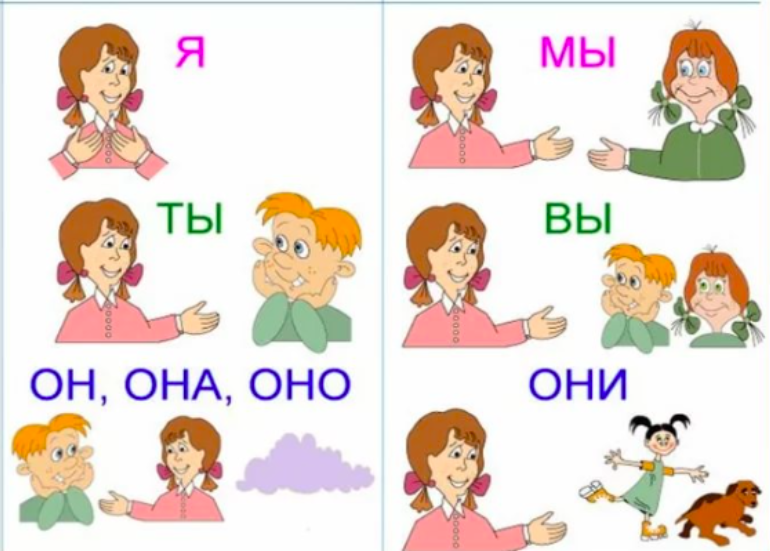
Now that you have learnt some basic Russian phrases, it is time to start forming your own Russian sentences. To do this you need to learn about Russian verbs and pronouns. This lesson will enable you to start forming short Russian sentences. When you are learning to speak Russian it is easiest to start by just using short sentences. Often you can break a long sentence into several short ones. This is a long lesson, and introduces some of the most difficult concepts in Russian. So don't worry if you need to go slowly, or it takes some time to understand at first. You can always come back and review this lesson. When you have completed this lesson you will have taken a major step forward in understanding Russian grammar.
Russian
Role Play lesson - how to act during chekin, in departure hall and at customs
English
A boy and his friends find a coin. They make a small hole in it. They then tie a piece of cotton thread through the hole, and take the coin and the thread to the park near their home. They put the coin down on a path where someone walking by will see it, and hide themselves in the bushes nearby. Someone – an old gentleman perhaps – walks by. He sees the coin on the ground and bends down to pick it up. The boys pull the thread and the coin jumps away out of reach. With any luck the old gentleman falls over. The boys run off, laughing. My father-in-law says that he did this (and lots of other naughty things!) when he was young. The word MISCHIEF means something which we do for fun and which annoys, teases or makes fun of someone. The boys in my story were UP TO MISCHIEF. "You little monkeys – up to mischief again", the old man might have shouted at them as they ran off. Or he might have said things that I could not possibly repeat on a family podcast like this one. The adjective which comes from mischief is MISCHIEVOUS. The boys in my story were MISCHIEVOUS. And we can also use MISCHIEVOUS to describe the things that they did – a mischievous game, perhaps, or a mischievous thing to do. A joke for you. A priest is walking down the street. He sees a small boy stretching to reach the doorbell on a house. But the doorbell is high up, and the boy is only small, and he cannot stretch far enough. So the priest crosses the road and rings the doorbell for the boy. He looks down and says, "Well, my son, what happens now?" "We run, father".
English