Subject open-popover-icon
EN
How does OnClass work? Support Online now: 920

Theory / Lessons

Subject

Content language

Level

Popular lessons

Sort by:
0
25
SOLID
  • Computer Science

SOLID

In object-oriented computer programming, SOLID is a mnemonic acronym for five design principles intended to make software designs more understandable, flexible, and maintainable. The principles are a subset of many principles promoted by American software engineer and instructor Robert C. Martin,[1][2][3] first introduced in his 2000 paper Design Principles and Design Patterns.

  • Theory
  • All levels
  • English
Pavel
Pavel
0
25
50 basic Norwegian phrases
  • Norwegian

50 basic Norwegian phrases

Norwegian Core 50 phrases list. Sometimes linguists come up with stuff that’s really useful for language learners. Scientists use the list to compare languages – why don’t you use it to test your Norwegian skills! Examples: Hva heter du? - What's your name? Jeg heter ... - My name is ... Hvordan går det? - How are you? Bra, takk - Good, thanks Dårlig - Bad Hva vil du ha? - What do you want?

  • Theory
  • Beginner
  • English
Oleg Ivanov
Oleg I.
0
25
Basic Russian Phrases
  • Russian

Basic Russian Phrases

Now that you understand the Russian letters and numbers, we will begin to learn some basic Russian phrases that you will commonly use as part of everyday communication. We will not attempt to introduce any grammar in this lesson. It is more important to learn some basic communication skills in Russian. Once you have a 'feel' for the language, you will find it easier to understand how the grammar works. When you were young, you learnt to speak before you learnt the grammar. We feel it is easier to learn Russian the same way, however don’t worry, we will cover grammar in later lessons. In this lesson you will learn the Russian language basics. When you are in Russia it is important to realise that Russians have two manners of speaking, formal or friendly. It would be considered slightly rude to use the wrong form in the wrong situation. Use the friendly (or familiar) form when you are speaking to someone you consider a friend. In situations where you have never met the person before you would use the formal form, for example in shops or with taxi drivers. You would also use the formal form as a sign of respect to teachers, or in places like business meetings. Keep this in mind as you work through these Russian lessons. This is much easier than it sounds, as there are only a couple of words that change. (Mainly the Russian word for “you”.)

  • Theory
  • Beginner
  • Russian
Eugeniia Klimutina
Eugeniia K.
0
25
Difference
  • English

Difference

English is full of look-alike and sound-alike words that easily trip up even confident speakers and writers. This lesson breaks down two frequently confused pairs: disassemble vs. dissemble and envelop vs. envelope. By exploring their origin, exact definitions, and silent letter differences, you'll learn how a single letter or syllable completely changes a word from a physical action into a cover, or from a lie into taking something apart. Perfect for refining your writing accuracy and vocabulary precision.

  • Theory
  • Beginner
  • English
Eugeniia Klimutina
Eugeniia K.
0
23
Род имён существительных
  • Russian

Род имён существительных

Цель: познакомить с грамматическим признаком имён существительных – родом; создать условия для усвоения способа определения рода имени существительного через алгоритмизацию деятельности учащихся.

  • Theory
  • level.high school
  • Russian
Eugeniia Klimutina
Eugeniia K.

Other lessons

0
53
Challanges
  • English

Challanges

Spoken class about how t challange yourself to do something in order to achieve yor goal

  • Theory with exercises
  • Intermediate
  • English
Darina Gribanova
Darina G.
0
53
First friends
  • English

First friends

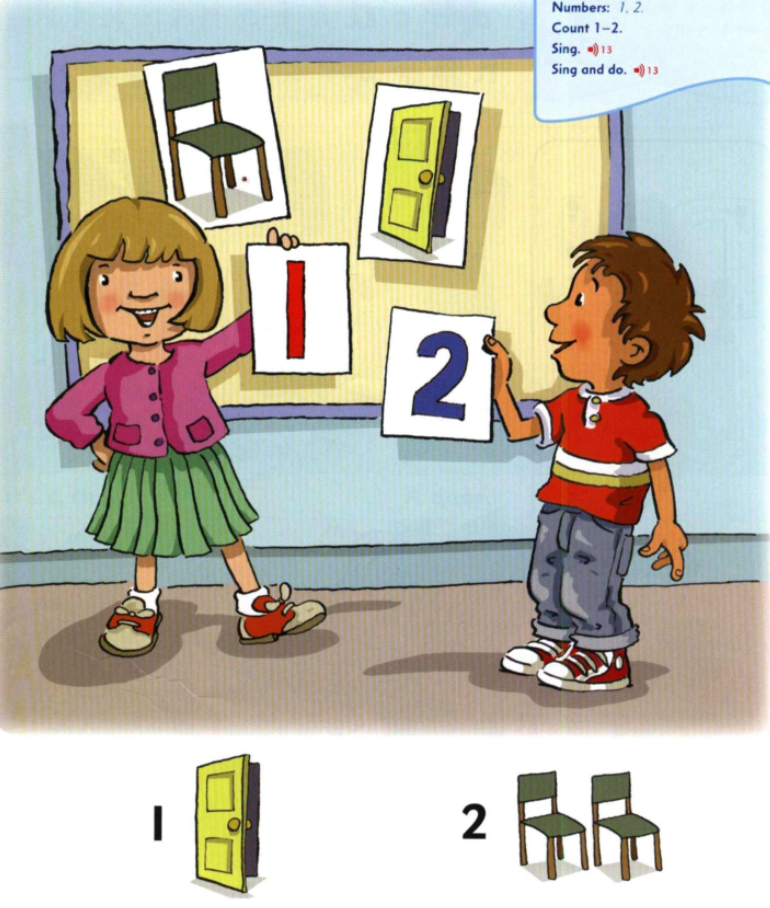
-numbers 1 and 2 -review of classroom vocabulary

  • Theory with exercises
  • Beginner
  • English
Elizaveta Grishkova
Elizaveta G.
0
53
Hobbies
  • English

Hobbies

In this class we will talk about hobbies and revise Present vs Future Simple

  • Theory with exercises
  • Elementary
  • English
Maria  Nekrasova
Maria .