


- English
FCE
Use of English Reading Speaking
- Exercise
- Upper Intermediate
 English

Use of English Reading Speaking
English
In this lesson we will talk about new trends in different holidays, how people can update it. We will also discuss grammar topic - future constractions and differences between them.
English

How to build your own start up? Spoken lesson about building start up
English
Bridges... bridges, bridges, bridges. We talk a lot about bridges in Physics. Why? Because there is A LOT of practical physics that can be learned from the planning and construction of them. In this episode of Crash Course Physics, Shini talks to us about a particular mistake made in engineering the Millennium Bridge which allows us to talk about simple harmonic motion.
English
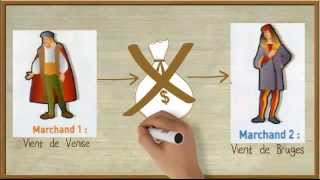
Je suis bien arrivée à Londres pour ma dernière année d’études de marketing à l’université. Là-bas tout le monde parle anglais ! Londres est différent de Paris. Par exemple, les bus sont rouges et certaines stations de métro semblent très anciennes.
English

Safari class in GLOW marathon of English
English
In this lesson we will talk about hobbies and if it can become a business
English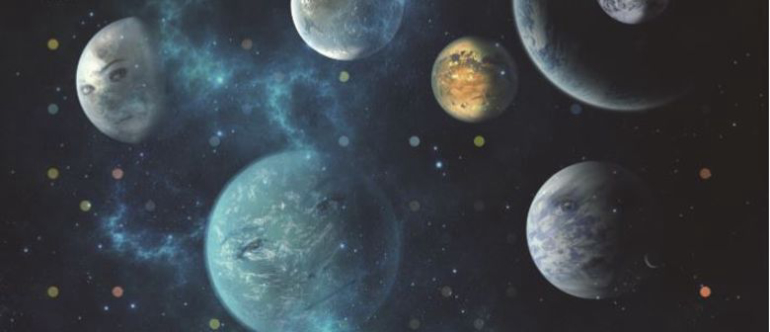
Our universe contains an amazing array of celestial objects, sometimes referred to as celestial bodies or astronomical objects. Though most of the observable cosmos is composed of empty space, this cold, dark void that is sparsely populated by a number of astronomical objects that range from the common to the bizarre. Known collectively by astronomers as celestial objects, celestial bodies, astronomical objects, and astronomical bodies, they are the stuff that fills the empty space of the universe. Most of us are familiar with the stars, planets, and moons. But beyond these everyday celestial objects, lies an amazing collection of other wondrous sights. There are colorful nebulae, delicate star clusters, and massive galaxies. Pulsars and quasars add to the mystery, while black holes swallow up every bit of matter that comes too close. And now, the search is on to identify the mysterious, invisible objects known as dark matter. Join Sea and Sky for an intriguing journey as we discover these amazing celestial objects.
English
These brief videos provide an introductory appreciation of how we learn skills and information, move, think, feel, speak and remember. They are brought to you by the UCLA Brain Research Institute and by Bruce H. Dobkin, MD, who directs the neurorehabilitation program in the Department of Neurology at UCLA. The videos especially aim to reach out to students in grade school to stir their interest, and to people with disabilities in walking, using an affected upper extremity, and loss of memory from neurological diseases such as stroke, brain trauma, tumors, multiple sclerosis, cerebral palsy, Parkinsons, and Alzheimers disease.
English
Continuing in our journey of understanding motion, direction, and velocity... today, Shini introduces the ideas of Vectors and Scalars so we can better understand how to figure out motion in 2 Dimensions. But what does that have to do with baseball? Or two baseballs?
English