EN
How does Onclass work? Support Online now: 379

EnglishForeign languagePodcast / Lessons

Popular lessons

0
22
I Have a Dream
  • English

I Have a Dream

Have you a dream? I mean, is there something that you would really like to do in your life – such as travelling round the world, or writing a best-selling novel, or climbing Mount Everest, or learning a new language. Good. It is important that we have dreams like these. But what would you do to achieve your dream. Would you, for example, walk out of your job so that you could do the thing you really want to do? Hmm. That might be difficult. How would you get the money you need to live on? And suppose you had a well-paid and very important job. Would you give that job up to pursue your dream? This morning's newspapers tell us about someone who has done just that. His name is Paul Drayson. He is 47 years old. He started his career as a businessman, and he was very successful. He made a fortune as boss of a company which makes equipment for giving people medical injections without sticking a needle into them. Then he became interested in politics. He gave a lot of money to the Labour Party. The government made him a member of the House of Lords, which is the upper chamber of the British parliament. (This means that he is now Lord Drayson, and not plain, ordinary Mr Drayson.) Then Lord Drayson became a minister in the government, at the Ministry of Defence. He was responsible for buying equipment for the British armed forces. Both the government’s supporters and his opponents said that he was good at his job. He obviously had a bright political career ahead of him. But Lord Drayson had a dream. It was a dream about driving motorcars very fast. He bought a 6-litre Aston Martin racing car. He drove it around race tracks. He competed in races; then he started to win some of the races, and this year he came third in the British GT championship. (The GT championships are for cars which are nearly the same as cars which you can drive on normal roads). People who know him say that, as a racing driver, Paul Drayson is both brave and intelligent.

  • Podcast
  • All levels
  • English
Andrei Scherbak
Andrei Scherbak
0
22
Today's podcast is by Mark. He is a football coach
  • English

Today's podcast is by Mark. He is a football coach

Hello everyone. A few years ago, I moved from England to New Zealand to coach football to children in Auckland, the biggest city in New Zealand. I'd like to tell you about the differences between football in England and football in New Zealand. I grew up in London in England and spent many hours as a child playing football with my friends in the park. We used to play football after school and at the weekend, and often all day long in the school holidays. One of the first things I noticed when I moved to New Zealand was that very few children play football after school or at the weekends. Even on a sunny day in New Zealand, many of the parks will be completely empty! In cities in England, children will arrange to meet their friends for a game in the park, but in New Zealand the children only ever play football when it's organised for them by their parents or by their team coach. If you've ever played football, you will know that it takes many hours of practice to get skilful and make the ball do anything you want it to. Sometimes it can take lots and lots of mistakes before a child gets it right! In New Zealand, children don't spend a lot of time playing football on their own so they don't try new things and make mistakes. Instead they spend an hour or two a week being told what to do by a parent or a coach. This means they don't get to make their own mistakes and learn things for themselves. Imagine learning English and never being allowed to make a mistake? It would be very difficult, and not much fun either!

  • Podcast
  • Pre-Intermediate
  • English
Andrei Scherbak
Andrei Scherbak
0
21
"A Gruesome Discovery"
  • English

"A Gruesome Discovery"

Today we visit the Channel Islands. The Channel Islands are a group of islands in the English Channel, close to the north coast of France. But they are not part of France. And they are not really part of Britain either. The British Queen is also ruler of the Channel Islands, and the British government looks after their defence and foreign affairs. But in other respects, the islands are tiny independent states – they have their own Parliaments and governments and their own laws. Until about 100 years ago, most people on the islands spoke a dialect of French, but today the main language is English.

  • Podcast
  • Pre-Intermediate
  • English
Eugeniia Klimutina
Eugeniia Klimutina
0
21
Podcast: "Hardware"
  • English

Podcast: "Hardware"

"Hardware" means the computer itself and other machines which are connected to the computer such as printers or external disk drives. "Software" means the electronic programmes which make the computer do what you want it to do (or, sometimes, what the computer wants to do!)

  • Podcast
  • Intermediate
  • English
Eugeniia Klimutina
Eugeniia Klimutina
0
20
"Royal Ascot"
  • English

"Royal Ascot"

Today we go horse racing, and we meet people with lots of money and no dress-sense! Ascot is a small town, south-west of London, and close to the royal castle at Windsor. In 1711, Queen Anne went horse-riding from Windsor, and "discovered" Ascot. She decided that it was exactly the right place for horse races.

  • Podcast
  • Pre-Intermediate
  • English
Eugeniia Klimutina
Eugeniia Klimutina
0
19
Step 2. Create a lesson description
  • English

Step 2. Create a lesson description

Create a lesson by adding multiple slides, each capable of holding a diverse range of content blocks, including text, video, images, and more. Choose the appropriate type and quantity of content for each slide as needed. Create a lesson by adding multiple slides, each capable of holding a diverse range of content blocks, including text, video, images, and more. Choose the appropriate type and quantity of content for each slide as needed.

  • Podcast
  • Beginner
  • English
Ignat Voronov
Ignat Voronov
0
19
The Lightbulb
  • English

The Lightbulb

A few years ago there were lots of lightbulb jokes in English. You probably had them in your language too. Here is an example. How many policemen/civil servants/school teachers does it take to change a lightbulb? Five – one to stand on a table holding the lightbulb, and four to pick the table up and turn it round. Some people find these jokes very funny. Other people don't think they are funny at all.

  • Podcast
  • Beginner
  • English
Eugeniia Klimutina
Eugeniia Klimutina
0
17
"Mischief"
  • English

"Mischief"

A boy and his friends find a coin. They make a small hole in it. They then tie a piece of cotton thread through the hole, and take the coin and the thread to the park near their home. They put the coin down on a path where someone walking by will see it, and hide themselves in the bushes nearby. Someone – an old gentleman perhaps – walks by. He sees the coin on the ground and bends down to pick it up. The boys pull the thread and the coin jumps away out of reach. With any luck the old gentleman falls over. The boys run off, laughing. My father-in-law says that he did this (and lots of other naughty things!) when he was young. The word MISCHIEF means something which we do for fun and which annoys, teases or makes fun of someone. The boys in my story were UP TO MISCHIEF. "You little monkeys – up to mischief again", the old man might have shouted at them as they ran off. Or he might have said things that I could not possibly repeat on a family podcast like this one. The adjective which comes from mischief is MISCHIEVOUS. The boys in my story were MISCHIEVOUS. And we can also use MISCHIEVOUS to describe the things that they did – a mischievous game, perhaps, or a mischievous thing to do. A joke for you. A priest is walking down the street. He sees a small boy stretching to reach the doorbell on a house. But the doorbell is high up, and the boy is only small, and he cannot stretch far enough. So the priest crosses the road and rings the doorbell for the boy. He looks down and says, "Well, my son, what happens now?" "We run, father".

  • Podcast
  • Elementary
  • English
Eugeniia Klimutina
Eugeniia Klimutina
0
16
"How to Keep Track of the Kids"
  • English

"How to Keep Track of the Kids"

Do you know the English expression "to keep track of" something? If you "keep track of" something, you always have a good, up-to-date knowledge of it. Here are some examples to help you understand the way we use the expression.

  • Podcast
  • Pre-Intermediate
  • English
Eugeniia Klimutina
Eugeniia Klimutina
0
13
Hotel Reservations
  • English

Hotel Reservations

Hotel Reservations: Checking In on Essential English" is your practical guide to navigating hotel bookings with confidence. Learn the key phrases, vocabulary, and etiquette needed to request room types, negotiate check-in times, ask about amenities, and handle unexpected issues smoothly during your stay.

  • Podcast
  • Pre-Intermediate
  • English
Eugeniia Klimutina
Eugeniia Klimutina

Other lessons

0
56
Some vs Any
  • English

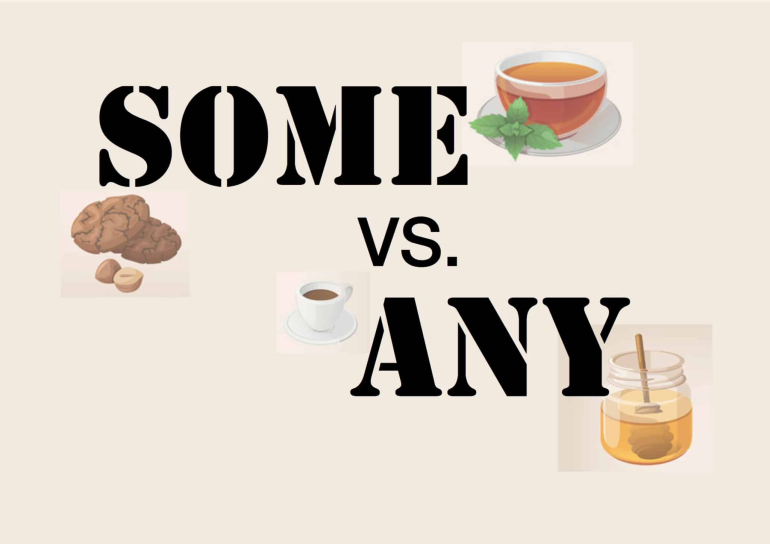
Some vs Any

Some / Any / Review how to use 'some' and 'any' here. Online exercises for using confusing words correctly. Have a try!

  • Exercise
  • Elementary
  • English
Oleg Ivanov
Oleg Ivanov
0
54
Biography of Alexander Pushkin
  • English

Biography of Alexander Pushkin

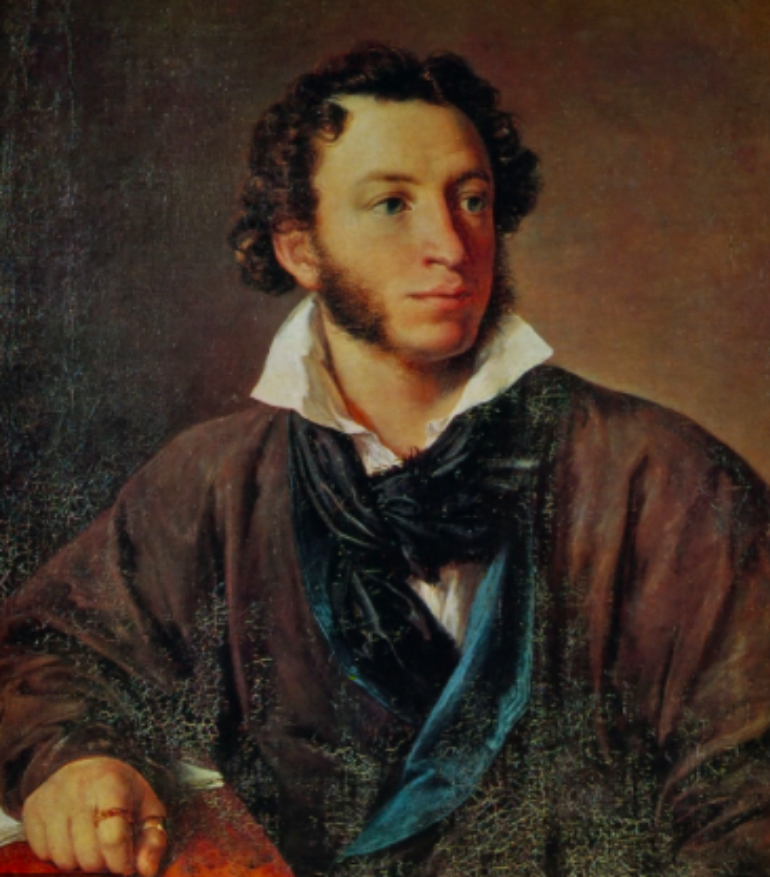
Alexander Sergeyevich Pushkin ( 6 June [O.S. 26 May] 1799 – 10 February [O.S. 29 January] 1837) was a Russian poet, playwright, and novelist of the Romantic era who is considered by many to be the greatest Russian poet and the founder of modern Russian literature.

  • Theory with exercises
  • Upper Intermediate
  • English
Eugeniia Klimutina
Eugeniia Klimutina
0
48
Challanges
  • English

Challanges

Spoken class about how t challange yourself to do something in order to achieve yor goal

  • Theory with exercises
  • Intermediate
  • English
Darina Gribanova
Darina Gribanova
0
46
Public speech
  • English

Public speech

In this class we will discuss what sucessfull public speech is, you experience with it, evaluate speech of other persons. Also we will discuss grammar - usage of structures to express past habits and actions.

  • Theory with exercises
  • Intermediate
  • English
Maria  Nekrasova
Maria Nekrasova
0
46
Phobias
  • English

Phobias

Lots of people struggle with their fears every day. Some of them try to cope with them, others are used to living with them. Today, we are going to talk about the most common phobias and the reasons why they appear. Also, we'll read a personal story to have a closer look at this problem and study the vocabulary that can help you to express your opinion about phobias. In addition to that, we'll study and practise how to use past modals correct

  • Theory with exercises
  • Intermediate
  • English
Darina Gribanova
Darina Gribanova
0
46
Food myths
  • English

Food myths

In this class we will discuss different Food myths and if they are true, also some great food lifehacks. We will learn passive and active voice as well.

  • Theory with exercises
  • Intermediate
  • English
Maria  Nekrasova
Maria Nekrasova