


- English
Cash or no cash?
In this lesson we will talk about cash and digital payments. We will watch the video about cashless trends. Also we will revise future tenses and future forms.
- Theory with exercises
- Intermediate
 English

In this lesson we will talk about cash and digital payments. We will watch the video about cashless trends. Also we will revise future tenses and future forms.
English
oday we learn about how to get rid of things. Kevin and Joanne have an old sofa. In fact, it used to be Kevin's sofa in the good old days when he was a student and before he had met Joanne. The sofa is dirty and stained, because Kevin has spilled beer on it, several times. The wooden frame is broken, because Kevin and about 10 friends sat on the sofa once to watch the World Cup final on television. The sofa is torn, because Kevin's cat used to sharpen his claws on it. Joanne has had enough. "That sofa has to go," she says. "We have to get rid of it." "That is my sofa", says Kevin. "We go back a long way. It is part of my history. We cannot get rid of it." "Yes, we can," says Joanne. "We will go to IKEA on Saturday to buy a new sofa." That was the wrong thing to say. Kevin does not want to get rid of his old sofa. And especially he does not want to go to IKEA on Saturday with hundreds of other people. He wants to go to a football match with hundreds of other people instead. Kevin and Joanne reach a compromise. They will get rid of the old sofa. They will buy a new sofa on the internet. There will be no trip to IKEA. And Kevin can go to the football match. "How shall we get rid of the sofa?" asks Kevin. "Perhaps we could sell it on eBay." "Don't be silly," says Joanne. "No-one will want to buy a dirty, broken sofa on eBay." "Perhaps we can just take it outside and leave it in the street," says Kevin. "Eventually the Council will take it away." "No they won't," says Joanne. "And we will probably be prosecuted for dumping rubbish in the street." "I could take the sofa into the garden and set fire to it," suggests Kevin. "Now you are being ridiculous," says Joanne. "George can borrow a van from his work, and you and George can put the sofa in the van and take it to the tip." The "tip" is the place where people can take things they do not want in order to get rid of them. There are big containers for different sorts of rubbish – for paper and cardboard
English
 English

alphabet video for kids/alphabet video for kids
English
 Russian
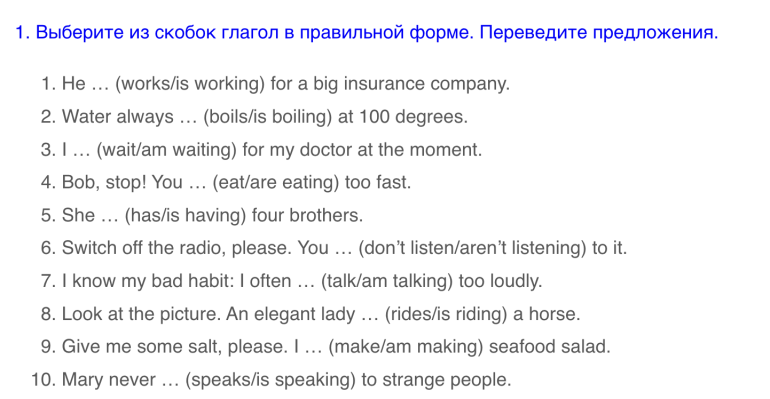
1. I (to do) morning exercises. 2. He (to work) at a factory. 3. She (to sleep) after dinner. 4. We (to work) part-time. 5. They (to drink) tea every day. 6. Mike (to be) a student. 7. Helen (to have) a car. 8. You (to be) a good friend. 9. You (to be) good friends. 10. It (to be) difficult to remember everything.
English
ordinal and cardinal numbers
English
Всем привет! Многие не знают, как и где употреблять частицу 呢 в китайском предложении. Давайте разбираться вместе. Пиши свой пример в комментариях. Приятного просмотра!


Dragons’ Den is a staple of British television, where ambitious entrepreneurs pitch their business ideas to a panel of multi-millionaire investors. In Part 1 of this guide, we dive into the real-world business vocabulary used inside the Den. You’ll learn key terms and idioms related to valuation, equity, pitch presentations, and negotiations. Whether you're aiming to sharpen your professional English for meetings, boost your listening comprehension, or master the art of the pitch, this episode breaks down native expressions through the lens of high-stakes television drama.
English
This is the VOA Special English Education Report. Web browsers first appeared on computers in the early nineteen nineties. Since then, the Internet has greatly changed the way people communicate. But some teachers think the changes are not all for the better.
English