

- English
Articles
In this class we will discuss unusual job positions, companies and articles
- Theory with exercises
- Advanced
 English



In this class we will discuss unusual job positions, companies and articles
English
Learn how to call your relatives in italian
English

In this class we will play the Goblet of fire games!
EnglishIn this class we will discuss street art and Inversion with "only", "neither" and "so"
English
oday we learn about how to get rid of things. Kevin and Joanne have an old sofa. In fact, it used to be Kevin's sofa in the good old days when he was a student and before he had met Joanne. The sofa is dirty and stained, because Kevin has spilled beer on it, several times. The wooden frame is broken, because Kevin and about 10 friends sat on the sofa once to watch the World Cup final on television. The sofa is torn, because Kevin's cat used to sharpen his claws on it. Joanne has had enough. "That sofa has to go," she says. "We have to get rid of it." "That is my sofa", says Kevin. "We go back a long way. It is part of my history. We cannot get rid of it." "Yes, we can," says Joanne. "We will go to IKEA on Saturday to buy a new sofa." That was the wrong thing to say. Kevin does not want to get rid of his old sofa. And especially he does not want to go to IKEA on Saturday with hundreds of other people. He wants to go to a football match with hundreds of other people instead. Kevin and Joanne reach a compromise. They will get rid of the old sofa. They will buy a new sofa on the internet. There will be no trip to IKEA. And Kevin can go to the football match. "How shall we get rid of the sofa?" asks Kevin. "Perhaps we could sell it on eBay." "Don't be silly," says Joanne. "No-one will want to buy a dirty, broken sofa on eBay." "Perhaps we can just take it outside and leave it in the street," says Kevin. "Eventually the Council will take it away." "No they won't," says Joanne. "And we will probably be prosecuted for dumping rubbish in the street." "I could take the sofa into the garden and set fire to it," suggests Kevin. "Now you are being ridiculous," says Joanne. "George can borrow a van from his work, and you and George can put the sofa in the van and take it to the tip." The "tip" is the place where people can take things they do not want in order to get rid of them. There are big containers for different sorts of rubbish – for paper and cardboard
English
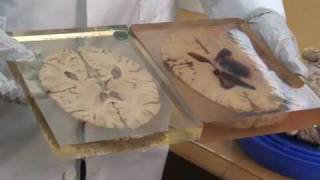
How the Brain Works These brief videos provide an introductory appreciation of how we learn skills and information, move, think, feel, speak and remember. They are brought to you by the UCLA Brain Research Institute and by Bruce H. Dobkin, MD, who directs the neurorehabilitation program in the Department of Neurology at UCLA. The videos especially aim to reach out to students in grade school to stir their interest, and to people with disabilities in walking, using an affected upper extremity, and loss of memory from neurological diseases such as stroke, brain trauma, tumors, multiple sclerosis, cerebral palsy, Parkinsons, and Alzheimers disease.
English
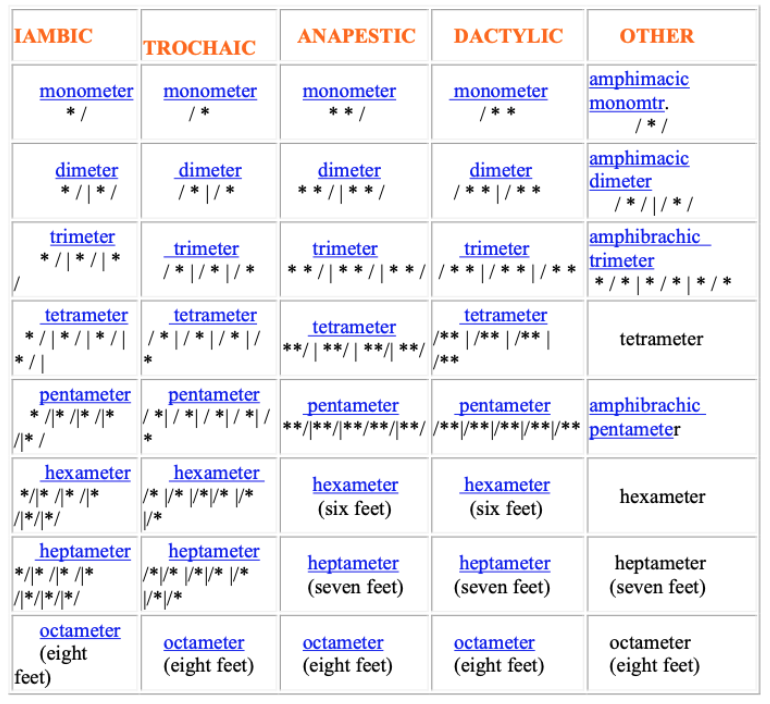
English poetry employs five basic rhythms of varying stressed (/) and unstressed (x) syllables. The meters are iambs, trochees, spondees, anapests and dactyls. In this document the stressed syllables are marked in boldface type rather than the tradition al "/" and "x." Each unit of rhythm is called a "foot" of poetry. The meters with two-syllable feet are - IAMBIC (x /) : That timeof yearthoumaystin mebehold - TROCHAIC (/ x): Tellmenotin mournful numbers - SPONDAIC (/ /): Break, break, break/ On thy coldgraystones, O Sea! - ANAPESTIC (x x/): And thesoundof a voicethat is still - DACTYLIC (/ x x): Thisis the forest primeval, the murmuring pinesand the hemlock (a trochee replaces the final dactyl)
English
In this lesson, you will find out what is special about marriage in different countries. You will also learn what to say if you end up having a misunderstanding with a person from abroad.
English

In this class we will discuss relationship crisis and what are the reasons of breaking up for couples. We will share experiences and see psycological points of view. Also we will look at the grammar topic "Should you..."
English
In this lesson we will discuss renovation topic, learn new words. talk about the experience of creating renovation. After we will revise past and present tenses.
English