


- Italian
Lesson 3: Numbers 1–10
Learn how to count to 10 in italian
- Theory
- Beginner
 English

Learn how to count to 10 in italian
English
We will discuss ecological issues and eco-friendly activities, also we will revise Reported Speech statements.
English

Edward de Bono's Six Thinking Hats approach is a simple way to gain objective perception of information in all areas. Putting on a hat of a certain color, a person plays a certain role that corresponds to it, looks at the problem from a certain point of view. There are six hats: white, yellow, red, black, green and blue.
English
 English
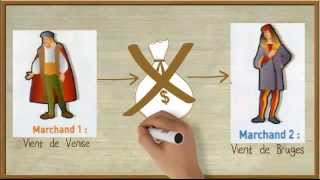
Je suis bien arrivée à Londres pour ma dernière année d’études de marketing à l’université. Là-bas tout le monde parle anglais ! Londres est différent de Paris. Par exemple, les bus sont rouges et certaines stations de métro semblent très anciennes.
English English
Now that you understand the Russian letters and numbers, we will begin to learn some basic Russian phrases that you will commonly use as part of everyday communication. We will not attempt to introduce any grammar in this lesson. It is more important to learn some basic communication skills in Russian. Once you have a 'feel' for the language, you will find it easier to understand how the grammar works. When you were young, you learnt to speak before you learnt the grammar. We feel it is easier to learn Russian the same way, however don’t worry, we will cover grammar in later lessons. In this lesson you will learn the Russian language basics. When you are in Russia it is important to realise that Russians have two manners of speaking, formal or friendly. It would be considered slightly rude to use the wrong form in the wrong situation. Use the friendly (or familiar) form when you are speaking to someone you consider a friend. In situations where you have never met the person before you would use the formal form, for example in shops or with taxi drivers. You would also use the formal form as a sign of respect to teachers, or in places like business meetings. Keep this in mind as you work through these Russian lessons. This is much easier than it sounds, as there are only a couple of words that change. (Mainly the Russian word for “you”.)
RussianIn this class we will talk about traditions and revise zero, first and second conditionals
English
Practice matching the opposite words!
English

English is full of look-alike and sound-alike words that easily trip up even confident speakers and writers. This lesson breaks down two frequently confused pairs: disassemble vs. dissemble and envelop vs. envelope. By exploring their origin, exact definitions, and silent letter differences, you'll learn how a single letter or syllable completely changes a word from a physical action into a cover, or from a lie into taking something apart. Perfect for refining your writing accuracy and vocabulary precision.
English