EN
How does Onclass work? Support Online now: 611

BosnianForeign language / Lessons

Nothing found.

We couldn’t find any matching results. Try adjusting your keywords or browsing by category.

Lessons in other subjects

0
19
Go wild in the garden
  • English

Go wild in the garden

It’s estimated that there are 23 million gardens in the UK – that’s a lot of land with which we can be gardening for wildlife! Bees, birds and butterflies are not only beautiful in their own right, but are useful for the gardener, from pest control to pollination. Bees help pollinate flowers and food. Frogs eat slugs. Birds and ladybirds help keep aphids at bay. If you want to create a home for wildlife in your garden, here’s a couple of nature-friendly gardening jobs to inspire you. If you create the right space, nature will come.

  • Reading lessons
  • Pre-Intermediate
  • English
Eugeniia Klimutina
Eugeniia Klimutina
0
19
Inventions that changed the world
  • English

Inventions that changed the world

Change is a part of life. If we don't move forward, we slide back. In this lesson, you will look into an exciting world of innovations. You will hear and read about some of the coolest inventions out there. You will also learn and practise functional language to explain how something works. Have a great lesson!

  • Theory with exercises
  • Intermediate
  • English
Darina Gribanova
Darina Gribanova
0
18
Must/have to
  • English

Must/have to

In this class we will discuss rules and learn modal verbs must and have to

  • Theory with exercises
  • Elementary
  • English
Maria  Nekrasova
Maria Nekrasova
0
18
How the Brain Works Part 4 (UCLA)
  • Biology

How the Brain Works Part 4 (UCLA)

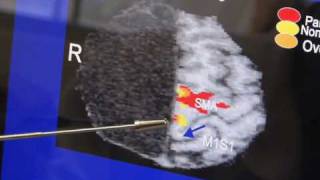
How the Brain Works These brief videos provide an introductory appreciation of how we learn skills and information, move, think, feel, speak and remember. They are brought to you by the UCLA Brain Research Institute and by Bruce H. Dobkin, MD, who directs the neurorehabilitation program in the Department of Neurology at UCLA. The videos especially aim to reach out to students in grade school to stir their interest, and to people with disabilities in walking, using an affected upper extremity, and loss of memory from neurological diseases such as stroke, brain trauma, tumors, multiple sclerosis, cerebral palsy, Parkinsons, and Alzheimers disease.

  • Video
  • Beginner
  • English
Andrei Scherbak
Andrei Scherbak