EN
How does Onclass work? Support Online now: 769

Podcast / Lessons

Popular lessons

0
24
Missing the Bus
  • English

Missing the Bus

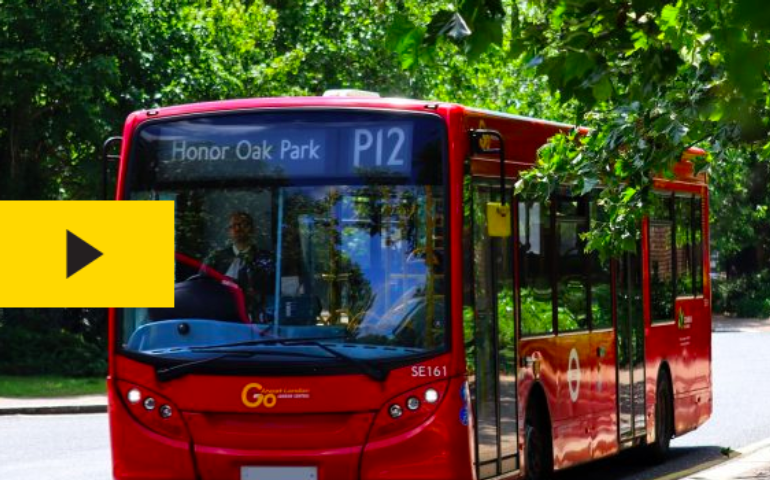
If you heard that there was a piece of technology that could do away with traffic jams, make cities more equitable, and help us solve climate change, you might think about driverless cars, or hyperloops or any of the other new transportation technologies that get lots of hype these days. But there is a much older, much less sexy piece of machinery that could be the key to making our cities more sustainable, more liveable, and more fair: the humble bus. Steven Higashide is a transit expert, bus champion, and author of a new book called Better Buses Better Cities. And the central thesis of the book is that buses have the power to remake our cities for the better. But he says that if we want the bus to reach its potential, we’re going to have to make the experience riding one, a lot more pleasant.

  • Podcast
  • Upper Intermediate
  • English
Eugeniia Klimutina
Eugeniia Klimutina
0
23
The Lightbulb
  • English

The Lightbulb

A few years ago there were lots of lightbulb jokes in English. You probably had them in your language too. Here is an example. How many policemen/civil servants/school teachers does it take to change a lightbulb? Five – one to stand on a table holding the lightbulb, and four to pick the table up and turn it round. Some people find these jokes very funny. Other people don't think they are funny at all.

  • Podcast
  • Beginner
  • English
Eugeniia Klimutina
Eugeniia Klimutina
0
22
"A Gruesome Discovery"
  • English

"A Gruesome Discovery"

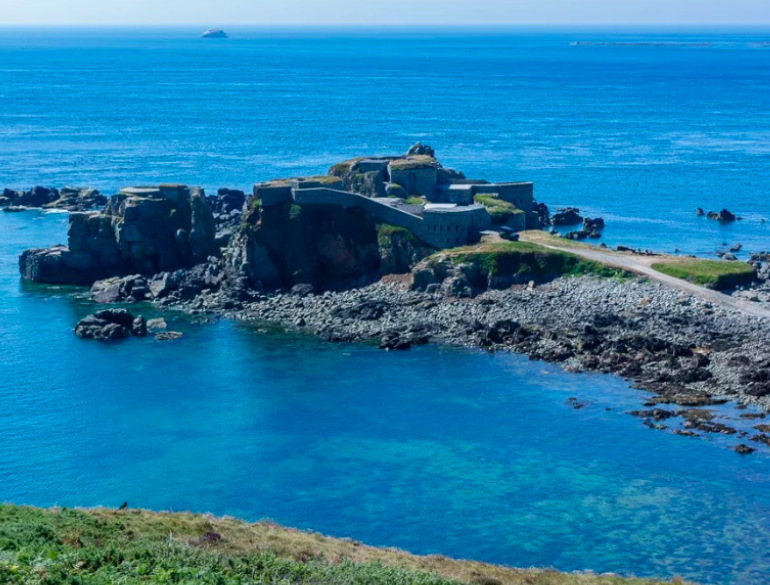
Today we visit the Channel Islands. The Channel Islands are a group of islands in the English Channel, close to the north coast of France. But they are not part of France. And they are not really part of Britain either. The British Queen is also ruler of the Channel Islands, and the British government looks after their defence and foreign affairs. But in other respects, the islands are tiny independent states – they have their own Parliaments and governments and their own laws. Until about 100 years ago, most people on the islands spoke a dialect of French, but today the main language is English.

  • Podcast
  • Pre-Intermediate
  • English
Eugeniia Klimutina
Eugeniia Klimutina
0
23
Exploring the history and industry of chocolate.
  • English

Exploring the history and industry of chocolate.

BOB DOUGHTY: I'm Bob Doughty. SHIRLEY GRIFFITH: And I'm Shirley Griffith with EXPLORATIONS in VOA Special English. Today we travel around the world exploring the history of chocolate. Its story begins with a plant whose scientific name, Theobroma cacao, means "food of the gods." For centuries, people have been enjoying the rich flavor of chocolate, a product made from this plant. Join us as we tell about the history of chocolate and how it is produced. We will also meet Jane Morris, a chocolate maker in Washington, DC. (MUSIC) BOB DOUGHTY: Most people today think of chocolate as something sweet to eat or drink than can be easily found in stores around the world. It might surprise you that chocolate was once highly treasured. SHIRLEY GRIFFITH: Historians believe the Maya people of Central America first learned to farm cacao plants around two thousand years ago. The Maya took the cacao trees from the rainforests and grew them in their gardens. They cooked the cacao seeds, then crushed them into a soft paste. They mixed the paste with water and flavorful spices to make an unsweetened chocolate drink. The Maya poured the chocolate drink back and forth between two containers so that the liquid had a layer of bubbles, or foam. Cacao and chocolate were an important part of Maya culture. There are often images of cacao plants on Maya buildings and art objects. Ruling families drank chocolate at special ceremonies. And, even poorer members of society could enjoy the drink once in a while.

  • Podcast
  • Intermediate
  • English
Eugeniia Klimutina
Eugeniia Klimutina
0
22
"Do you want to be a spy"
  • English

"Do you want to be a spy"

Intelligence. What does it mean? The word "intelligence" has two main meanings in English. First, it can mean "mental capacity" – if you are intelligent, you can think clearly and rationally, for example. But "intelligence" also means information. For example, we can talk about "market intelligence" – and that means, information about what is happening in a market, such as the stock market or the international oil market. Very often, we use "intelligence" to mean information which is secret, or which has been obtained illegally.

  • Podcast
  • Pre-Intermediate
  • English
Eugeniia Klimutina
Eugeniia Klimutina
0
22
Today's podcast is by Mark. He is a football coach
  • English

Today's podcast is by Mark. He is a football coach

Hello everyone. A few years ago, I moved from England to New Zealand to coach football to children in Auckland, the biggest city in New Zealand. I'd like to tell you about the differences between football in England and football in New Zealand. I grew up in London in England and spent many hours as a child playing football with my friends in the park. We used to play football after school and at the weekend, and often all day long in the school holidays. One of the first things I noticed when I moved to New Zealand was that very few children play football after school or at the weekends. Even on a sunny day in New Zealand, many of the parks will be completely empty! In cities in England, children will arrange to meet their friends for a game in the park, but in New Zealand the children only ever play football when it's organised for them by their parents or by their team coach. If you've ever played football, you will know that it takes many hours of practice to get skilful and make the ball do anything you want it to. Sometimes it can take lots and lots of mistakes before a child gets it right! In New Zealand, children don't spend a lot of time playing football on their own so they don't try new things and make mistakes. Instead they spend an hour or two a week being told what to do by a parent or a coach. This means they don't get to make their own mistakes and learn things for themselves. Imagine learning English and never being allowed to make a mistake? It would be very difficult, and not much fun either!

  • Podcast
  • Pre-Intermediate
  • English
Andrei Scherbak
Andrei Scherbak
0
21
"Royal Ascot"
  • English

"Royal Ascot"

Today we go horse racing, and we meet people with lots of money and no dress-sense! Ascot is a small town, south-west of London, and close to the royal castle at Windsor. In 1711, Queen Anne went horse-riding from Windsor, and "discovered" Ascot. She decided that it was exactly the right place for horse races.

  • Podcast
  • Pre-Intermediate
  • English
Eugeniia Klimutina
Eugeniia Klimutina
0
21
Podcast: "Hardware"
  • English

Podcast: "Hardware"

"Hardware" means the computer itself and other machines which are connected to the computer such as printers or external disk drives. "Software" means the electronic programmes which make the computer do what you want it to do (or, sometimes, what the computer wants to do!)

  • Podcast
  • Intermediate
  • English
Eugeniia Klimutina
Eugeniia Klimutina
0
19
Step 2. Create a lesson description
  • English

Step 2. Create a lesson description

Create a lesson by adding multiple slides, each capable of holding a diverse range of content blocks, including text, video, images, and more. Choose the appropriate type and quantity of content for each slide as needed. Create a lesson by adding multiple slides, each capable of holding a diverse range of content blocks, including text, video, images, and more. Choose the appropriate type and quantity of content for each slide as needed.

  • Podcast
  • Beginner
  • English
Ignat Voronov
Ignat Voronov
0
18
Le grandi bellezze – I Bronzi di Riace
  • Italian

Le grandi bellezze – I Bronzi di Riace

IN QUESTO PODCAST Uno degli aneddoti più ricorrenti durante le fasi di scavo per la costruzione di metropolitane o di parcheggi sotterranei è il ritrovo casuale di vasellame o strumenti di uso domestico appartenenti alle epoche storiche passate. Vengono così a galla vasi, gioielli, ceramiche dei nostri antenati. Materiale che troverà posto nei musei e che lascerà il posto alle macchine delle città nuove. Un modo originale di accostare passato e presente. Forse i due più famosi e recenti eventi archeologici sono: la scoperta dei Bronzi di Riace, a Riace appunto, in Calabria e il ritrovamento della Villa di Agrippina a Roma.

  • Podcast
  • Advanced
  • English
Eugeniia Klimutina
Eugeniia Klimutina

Other lessons

0
56
Tourism
  • English

Tourism

In this class we will discuss tourism and manners and revise present perfect

  • Theory with exercises
  • Pre-Intermediate
  • English
Maria  Nekrasova
Maria Nekrasova
0
56
Some vs Any
  • English

Some vs Any

Some / Any / Review how to use 'some' and 'any' here. Online exercises for using confusing words correctly. Have a try!

  • Exercise
  • Elementary
  • English
Oleg Ivanov
Oleg Ivanov
0
54
Ostern
  • German

Ostern

Bei dem Osterfest geht es um die Kreuzigung von Jesus Christus und um seine Auferstehung von den Toten. Es ist ein religiöses Fest.

  • Reading lessons
  • Intermediate
  • English
Eugeniia Klimutina
Eugeniia Klimutina
0
53
Public speech
  • English

Public speech

In this class we will discuss what sucessfull public speech is, you experience with it, evaluate speech of other persons. Also we will discuss grammar - usage of structures to express past habits and actions.

  • Theory with exercises
  • Intermediate
  • English
Maria  Nekrasova
Maria Nekrasova
0
54
Go wild in the garden
  • English

Go wild in the garden

It’s estimated that there are 23 million gardens in the UK – that’s a lot of land with which we can be gardening for wildlife! Bees, birds and butterflies are not only beautiful in their own right, but are useful for the gardener, from pest control to pollination. Bees help pollinate flowers and food. Frogs eat slugs. Birds and ladybirds help keep aphids at bay. If you want to create a home for wildlife in your garden, here’s a couple of nature-friendly gardening jobs to inspire you. If you create the right space, nature will come.

  • Reading lessons
  • Pre-Intermediate
  • English
Eugeniia Klimutina
Eugeniia Klimutina